Monday, January 6, 2020

Book review on Facebook:


I keep staying up too late reading this book about the Dust Bowl. Like a number of beautifully written books about American history, this was recommended to me by my son, Paul Wickelson, an American Studies PhD (University of Utah). The huge dust storms that plagued parts of Kansas, Colorado, Oklahoma, Texas, and New Mexico played a major role in the Great Depression of the 1930's, but I hadn't realized how connected this was to unbridled speculation--the same kind of speculation that preceded the stock market crash. Instead of stocks on Wall Street, it was wheat growing on dryland farms out in the middle of nowhere, where the buffalo no longer roamed, in the newly settled Southern High Plains. Would-be settlers were enticed by cheap land prices and by empty promises of good farming and boom towns serviced by railroad lines and other amenities. In the East, the stock market rose to dizzying heights, bank officers invested other people's money for personal profit, and when it all crashed, the rug was pulled out from under people's feet as their money vanished into thin air.
In the West, it was the ground itself that vanished out from under their feet. Settlers were encouraged by a few uncharacteristically wet years and soaring wheat prices to turn over more and more of virgin prairie sod to plant more and more wheat. This unbelievably lucrative venture lasted until the inevitable glut drove the price of wheat below the cost of production. The wheat market crashed. Farmers could not pay back the loans they had taken out for newfangled time-and-labor-saving tractors and combine harvesters, not to mention nicer homes to replace their leaky, cold dugouts and sod homes, and don't forget more land to plough under and plant to make up for the low prices they were getting! Meanwhile, grain rotted in the granaries or in piles heaped up on the ground, while city-dwellers in other parts of the country went hungry. Then the rain stopped coming; the land, dry and exhausted, could no longer sustain new crops, nor could it even revert back to prairie grass. The deep roots of the prairie sod that had held the soil for thousands of years had been ignorantly ripped out over a short span of years so that the land was left exposed to the perpetual winds of the High Plains. Soil represented a farmer's wealth, and now, the last of that thin dry layer of topsoil was snatched away
by the wind.
That's as far as I've gotten, and like with John Steinbeck's heartbreaking novel, The Grapes of Wrath that covers this same time period, I have truly come to care about the particular characters portrayed and the engagingly written narrative. This is history at it's best--it feels like real life--it hurts like real life.
Comments
  • Steph Fairbanks You need to watch Ken Burns’s “Dust Bowl”. It is fascinating.
    Jeff GeertsenJeff Geertsen Steph Fairbanks I had the same thought reading this harrowing description.
  • Paul Wickelson Something I like about the book is that it focuses on the people who stayed behind in the Dust Bowl. The story of the Okie migrants (ie., the people who fled the disaster to places like California) is more famous, made so by "The Grapes of Wrath," Woody Guthrie, etc. But the stories of the people who stayed are harrowing in their own way. We still have a lot to learn from the man-made ecological disaster that was the Dust Bowl. Another good book, though more academic and wonky, is Donald Worster's "The Dust Bowl."
    1
  • Sharman Hunter Wilson Thanks for pointing out the big difference between this book about those who stayed in the Dust Bowl and the Okies who got out in Grapes of Wrath. They all suffered horribly, no matter which choice they made.
Facebook post:
This put me into full rampage mode. I've been lucky to see many World Heritage sites in the Middle East,and these bombastic and ignorant threats are hitting too close to home. Has anyone tried to get through to Trump that this is actually a war crime? Does he even care? We're talking about Persia, one of the Cradles of Civilization! Thousands of years of history that is the heritage not just of the modern nation of Iran, but of much of the world, ourselves included. Being enemies of post-revolution Iran, for a tiny speck of time (less than 50 years) does not make it OK to obliterate precious beauty of the ages. It broke hearts all over the world when the Taliban destroyed the amazing giant Buddhas in Afghanistan and when ISIS detonated the beautiful ancient city of Palmyra in Syria.
And in case we've forgotten, we Americans, along with the Brits, callously bombed Dresden, one of Europe's most beautiful (and completely non-strategic) cities to smithereens, killing thousands of civilians in the process. They were trying--and failing--to teach Hitler a lesson, just as Trump is trying to do to Iran. His threats have been counterproductive (surprise!) and have only succeeded in turning even the moderate, anti-Iranian government, pro-democracy protesters against us. We are against the corrupt government in Iran, not the people under its thumb. We should be able to relate to what it's like to
live under a corrupt government.😥
A link and post from Facebook:

Here is a link to a book that some of you may be interested in. Margaret Olsen Hemming and Fatimah Salleh wrote a commentary for the Book of Mormon.

"Across our differences--black, white, brown, indigenous, bond, free, male, female, gay, straight, living the principle, attending and tithing, or seeking another way altogether--what bonds LDS/Mormon people together is our relationship to the Book of Mormon.......In this powerful new contribution to LDS scriptural study, Dr. Fatimah S. Salleh and Margaret Olsen Hemming have wrestled with the Book of Mormon in a whole new way: as a text that addresses inequality, trauma, dysfunction, and catastrophe and offers insights essential to achieving that dimension of Zion we call social justice."--Joanna Brooks
Comments
  • Sharman Hunter Wilson Just ordered it and can't wait to read it as we start this year's study! I am convinced that the ways scripture comes to us is more complicated than we like to think.It may be more like the telephone game we play as kids where a simple phrase gets whispered down a line of not-exactly-focused kids and comes out almost unrecognizable at the other end. It might be helpful to remember that God's voice has to be filtered through all those neural connections firing inside the particular limited mind of a relatively ignorant human being living in a particular finite place at a particular fixed time in a particular imperfect language. Add to that the notion that God respects our agency and doesn't fix all our mistakes, even when we are trying to do godly work. Why is that? It might be because wrestling with our own and others' human weaknesses is the point of life. I get uncomfortable when I see pride, racism and sexism in the B of M, but then I turn the page and find beautiful words of comfort and universalism that envelop "black and white, bond and free, male and female" in God's love. I have to wrestle with the complications and it (hopefully) makes me stronger.

Wednesday, April 3, 2019

Our Magnificent Bastard Tongue: The Untold History of EnglishOur Magnificent Bastard Tongue: The Untold History of English by John McWhorter
My rating: 4 of 5 stars


View all my reviews

 I loved this book--linguistics is a big interest of mine, and McWhorter brings it to my layman's level, with lots of humor thrown in. I started reading it in print, but decided to get the audiobook so I could hear the pronunciations of the many foreign words in there. He focuses on the evolution of the English language by way of the intermixing of cultures and people learning new languages as conquered or immigrant populations. He shows how linguists usually only look at written texts to trace the evolution of languages, without considering the history of the colloquial spoken word. This is not surprising because it is much more difficult road to follow. It often requires familiarity with less common languages and the ability to compare and connect the dots. His knowledge of Welsh, Norse, and other more obscure tongues allowed him to see the huge influence these languages had on modern English, and why English is so unique among the Germanic (and world) languages. He is also an entertaining narrator on the audiobook!

Sunday, October 7, 2018

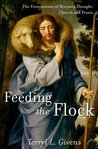
Feeding the Flock: The Foundations of Mormon Thought: Church and PraxisFeeding the Flock: The Foundations of Mormon Thought: Church and Praxis by Terryl L. Givens
My rating: 4 of 5 stars

I suppose I am not likely the intended audience for this book. I believe it was written primarily for non-Mormons who are interested in Mormon studies. This is the second volume of Terryl Givens' history of Mormon thought, the first being Wrestling the Angel. Whereas the first volume dealt with the key theological concepts of the nature of God and man and the relationship between them, this volume lays out the history of Mormonism's ecclesiastical structure and religious practices. Such a topic might seem dull to a born and bred Mormon--a member of the Church of Jesus Christ of Latter-Day Saints--who is well-acquainted with such things, but I happen to love the study of religion, including my own tradition. I like to read what respected scholars--both insiders and outsiders--have to say. I appreciate the perspective of this particular author because he places Mormonism within the broader context of Judeo Christian history. He takes Christian church practices, organizational structures, and the theology behind them and traces them from their early roots in Judaism to early Christianity. He follows the often heated debates that led to the Reformation and modern sectarianism. Mormonism can be seen as a response to this splintering of the Christian church into bitter competing sects. Established in 1830 as the restoration (as an ongoing process) of the "true and living" church of Jesus Christ by the founder, Joseph Smith, and his followers, it centers on the Christ of the New Testament, but with twists that other Christians deem heretical. Many of the twists go back to Old Testament concepts and practices. Givens compares and contrasts Mormon practices as they developed over time with those of Judaism and different Christian sects. I love getting the big picture!


View all my reviews